
Introduction
Imagine owning a share of a luxury Dubai villa without buying the whole property. That is now possible thanks to real estate tokenization.

This approach uses blockchain technology to split property ownership into digital tokens. Each token represents a small fraction of the asset and the income it produces.
Dubai has become a global leader in this space. The Dubai Land Department launched a real estate tokenization project targeting AED 60 billion in assets by 2033, which would make up 7% of all real estate transactions in the city. In early 2025, a regulated secondary market went live, allowing investors to trade fractional stakes in premium Dubai properties valued at around $5 million each. This shift makes real estate dubai uae more accessible than ever before.
These numbers show this is not a passing trend. The real estate tokenization market size and forecast shows the global market was valued at USD 3.73 billion in 2025 and is expected to reach USD 23.99 billion by 2035. For high-net-worth buyers and dubai real estate investors, this matters a lot.
Tokenization lowers the entry cost for premium properties and improves liquidity. You can buy into luxury villas, earn rental income proportional to your share, and trade your tokens on regulated platforms. This blends the stability of real estate with the flexibility of digital investing.
In this article, we explain what real estate tokenization means for Dubai’s villa market in 2026. We cover how it works, what regulations apply, and what opportunities exist for investors. Whether you are exploring investment in dubai real estate for the first time or you are a seasoned buyer, this guide provides a clear, data-rich roadmap.
For a broader look at the luxury property landscape, check out our villas for sale in Dubai guide covering top communities and smart buying strategies.
Ready to explore your options? Get a FREE Dubai Real Estate Consultation with Ayaz Salman to discuss how tokenized villa investments could fit your portfolio.
What Is Real Estate Tokenization? A Primer for Dubai Investors
Let’s break down what real estate tokenization actually means. Think of it like this: instead of buying an entire villa, you buy a digital "slice" of it. That slice is a token, and it lives on a blockchain.
Here is the simple definition. Real estate tokenization turns a physical property into digital tokens. Each token stands for a small piece of ownership. So if a villa is worth 10 million AED and the developer issues 100,000 tokens, each token is worth 100 AED. You can buy 10 tokens or 1,000 tokens. The more you own, the bigger your share of the rental income and any price increase.
The whole thing works because of blockchain technology. A blockchain is a shared digital record that cannot be changed easily. Every token purchase, sale, and income payment gets recorded there. This makes the system transparent and secure.
How Tokenization Actually Works
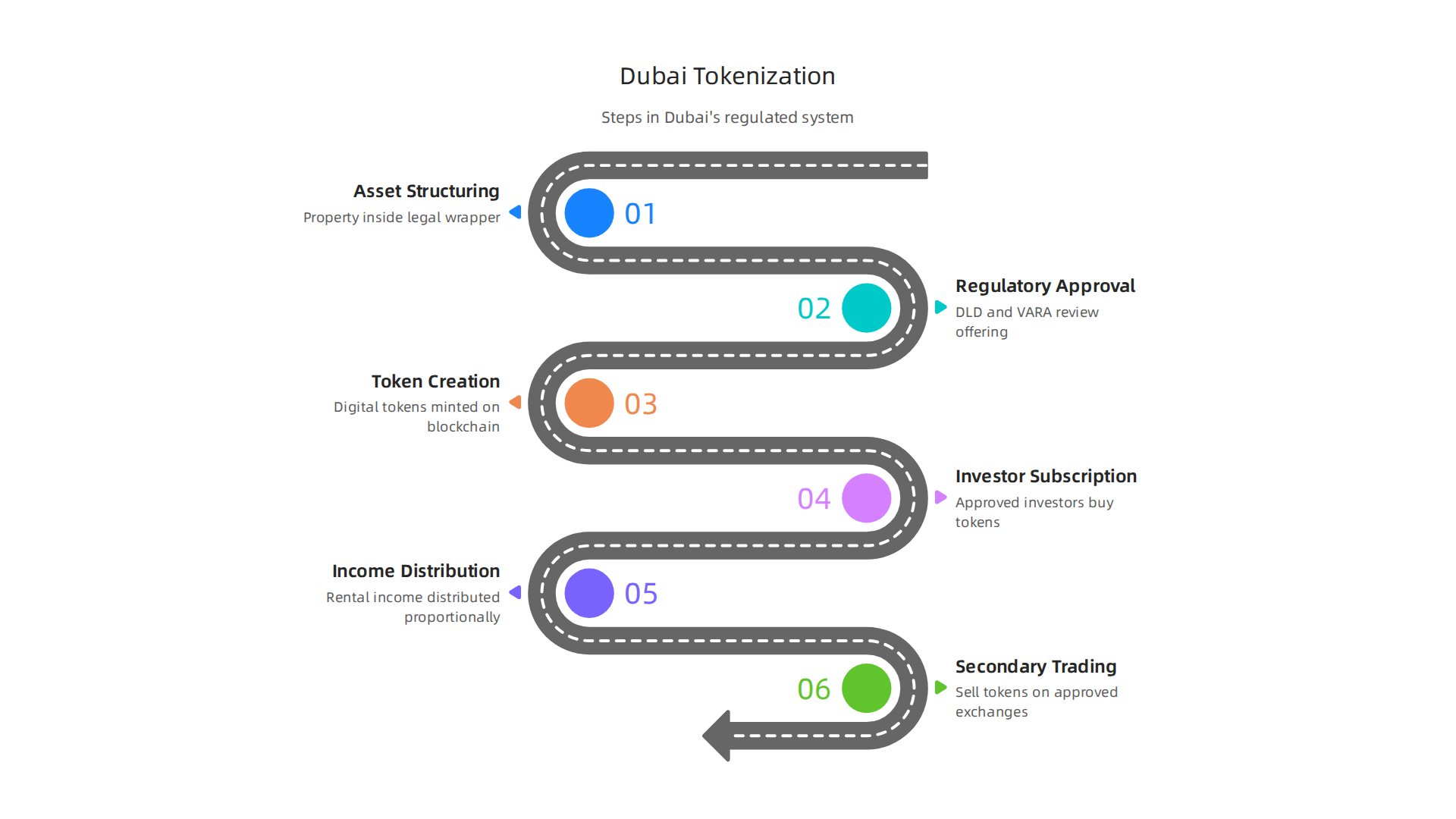
The process follows a clear path. Here are the main steps based on how Dubai’s regulated system operates:
-
Asset Structuring – A property is placed inside a legal wrapper, usually a Special Purpose Vehicle (SPV). This creates a clean legal foundation for fractional ownership.
-
Regulatory Approval – The Dubai Land Department (DLD) and the Virtual Assets Regulatory Authority (VARA) review and approve the offering. This ensures everything meets local laws.
-
Token Creation – Digital tokens are minted on a blockchain platform. Each token represents a defined ownership share. Smart contracts automate things like income distribution.
-
Investor Subscription – Approved investors buy tokens through a regulated marketplace. You do not need to handle the full property price. Just the amount that matches the tokens you want.
-
Income Distribution – Rental income flows proportionally to token holders. If the villa earns 100,000 AED in rent and you own 1% of the tokens, you get 1,000 AED.
-
Secondary Trading – You can sell your tokens on approved exchanges. This gives you an exit path that traditional real estate does not offer.
Dubai’s DLD explains this framework in detail on its official website. You can read the Dubai Land Department real estate tokenization page to see how the government is building the infrastructure.
Why Dubai Is the Perfect Place for This
Dubai is miles ahead of most cities when it comes to tokenized real estate. The government wants to make property ownership accessible to more people. Right now, UAE residents can start with investments as low as around 540 AED. That is a game changer for anyone who thought Dubai villas were out of reach.

The DLD is working closely with VARA, the Dubai Future Foundation, and the UAE Central Bank. They have already launched a pilot platform called Prypco Mint. This platform connects to the traditional land registry, so your tokenized ownership is backed by official records.
For dubai uae real estate investors, this means you can buy into luxury villa communities without needing millions of dirhams. Communities like Dubai South and Emaar’s Oasis are becoming targets for tokenization projects. These areas offer family-friendly layouts and strong rental demand.
A Simple Example
Imagine a luxury villa in Emaar’s Oasis valued at 5 million AED. The developer works with a regulated tokenization platform. They create 50,000 tokens at 100 AED each. You buy 500 tokens for 50,000 AED. That gives you a 1% ownership stake.
Each month, the villa generates 20,000 AED in rent. Your share is 200 AED, sent automatically to your wallet. Later, if you want to exit, you sell your tokens on the secondary market. No need to find a buyer for the whole villa. Just sell your 500 tokens.
This kind of flexibility is why investment in dubai real estate is shifting. More people can participate, and they can do it with more control.
If you are thinking about buying a physical villa instead of tokens, knowing the best communities helps. Check out our guide to the top oasis communities for smart investors to see where tokenization might be headed next.
So What Does This Mean for You?
Real estate tokenization is not a fantasy. It is happening right now in Dubai. The rules are clear, the technology is secure, and the government is fully behind it. Whether you want to start small or build a bigger portfolio, tokenized villas offer a new way to own a piece of Dubai’s premium property market. The key is to understand the basics, work with regulated platforms, and choose properties in strong locations.
Dubai’s Regulatory Foundation for Tokenized Real Estate
Now that you understand how tokenization works, let’s look at the rules that make it legal and safe in Dubai. The city did not leave this to chance. It built a clear regulatory foundation to protect investors and encourage innovation.

The Three Main Regulators
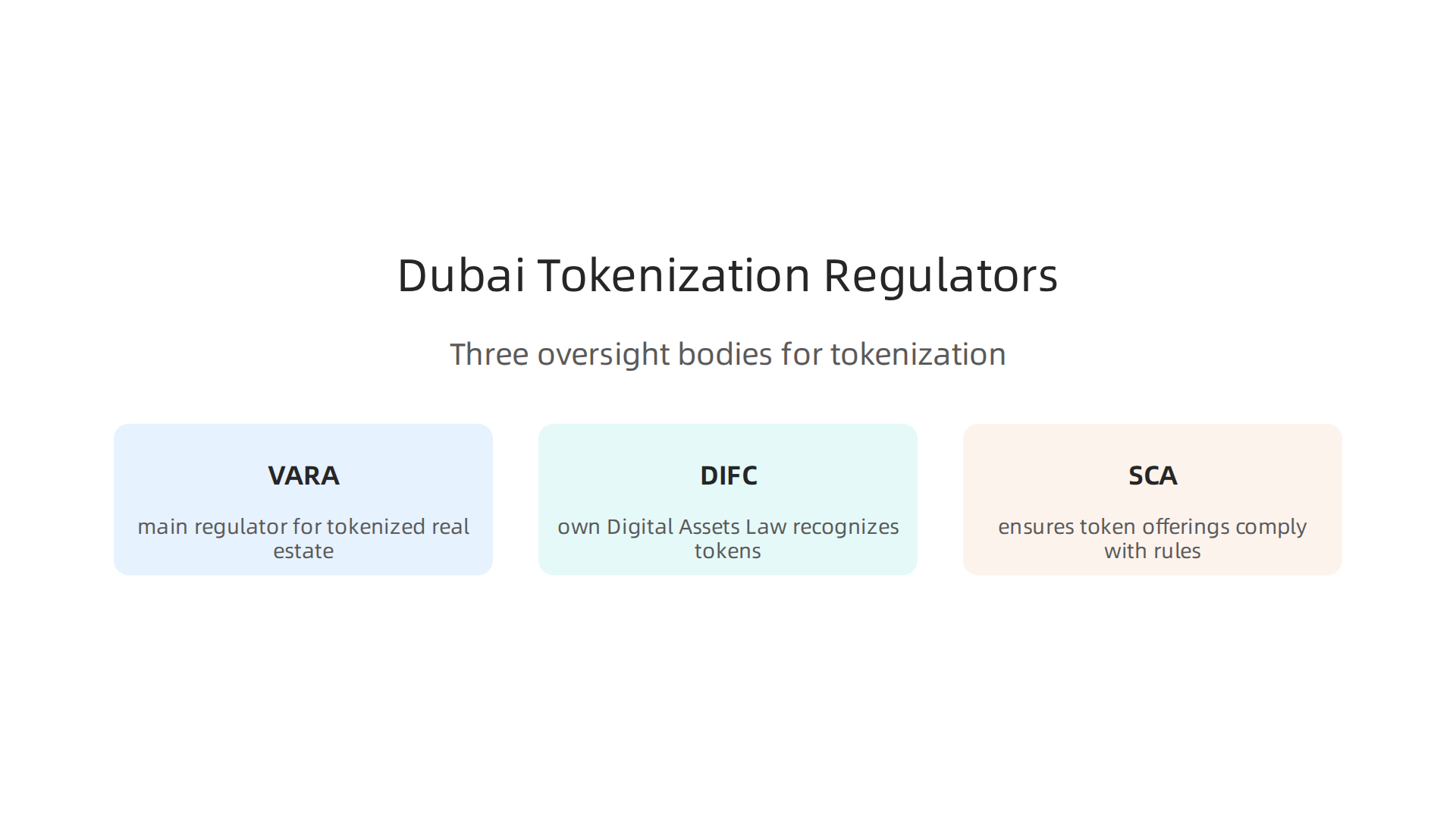
Real estate tokenization in Dubai sits under three layers of oversight. Together they cover property law, securities law, and virtual asset law.
-
Virtual Assets Regulatory Authority (VARA) – This is the main regulator for tokenized real estate in Dubai. VARA sets the rules for licensing, compliance, and operation of tokenization platforms. It also covers anti-money laundering (AML) and know-your-customer (KYC) requirements. You can review the VARA regulatory framework for real estate tokenization to see the full detail.
-
Dubai International Financial Centre (DIFC) – The DIFC has its own Digital Assets Law. This law legally recognizes digital tokens as property. That gives token holders strong rights around ownership and transfer. For properties inside DIFC, the Dubai Financial Services Authority (DFSA) provides oversight.
-
Securities and Commodities Authority (SCA) – At the federal level, the SCA ensures token offerings comply with national financial market rules. If a token is classified as a security, the issuer must follow prospectus and licensing rules.
How Tokens Are Classified
Whether a real estate token falls under VARA or securities law depends on its features. Tokens that give profit rights or are traded on exchanges may be treated as securities. Others may be considered virtual assets. This means every tokenization project needs careful mapping across multiple regulators. The Clyde & Co guide to UAE real estate tokenisation explains how this classification works in practice.
Recent 2025–2026 Updates
Dubai keeps improving its rules. In 2025, VARA introduced updated guidelines specifically for real-world asset (RWA) tokens. These set clear standards for issuance, licensing, and ongoing compliance. In 2026, the rules are fully in effect. Issuers must now hold a Category 1 Virtual Asset License, publish a compliant whitepaper, and back their tokens with audited assets. The 2026 real estate tokenization regulatory updates from Engel & Völkers summarize what changed.
The Dubai Land Department also launched a pilot platform called Prypco Mint. This connects token ownership directly to the official land registry, so your digital tokens are backed by real government records.
What This Means for You
For dubai real estate investors, this regulatory clarity is a huge advantage. You know exactly who oversees each part of the system. You know that platforms must follow strict AML and KYC rules. You also know that tokens representing ownership are recognized as property under DIFC law.
If you are thinking about investing in tokenized villas, start by understanding these rules. Work only with platforms that have proper licenses from VARA or the DFSA. And always check that the property itself is registered with the DLD.
For a complete walkthrough of the buying process in Dubai, including regulatory steps, read our Dubai villa buying guide for families and investors. It covers everything from choosing a community to closing a deal.
If you want personalized advice on investment in dubai real estate, connect with Ayaz Salman for a FREE Dubai Real Estate Consultation. He can help you understand how tokenization fits into your overall strategy.
Market Adoption & Statistics: Tokenization in Dubai’s Villa Sector
The numbers behind real estate tokenization in Dubai are getting hard to ignore. This is not a small experiment anymore. It is a fast-growing market with real money, real buyers, and real villas being turned into digital tokens.
Market Size Projections
The Dubai Land Department expects tokenized real estate to hit AED 60 billion by 2033. That would make up about 7% of all property transactions in the city. According to the Dubai real estate tokenization market forecast, this growth reflects how quickly investors are adopting digital property ownership. On a global scale, the real estate tokenization market was valued at USD 3.73 billion in 2025 and is projected to reach USD 23.99 billion by 2035.
What does that mean for villas? A big chunk of that 60 billion AED will come from luxury residential properties. High-end villas in communities like Palm Jumeirah, Emirates Hills, and newer oasis developments are ideal candidates for tokenization because of their high value and strong investor demand.
Real World Proof: Sold Out in Two Minutes
If you still wonder whether people actually buy tokenized villas, look at what happened in 2025. The Dubai Land Department launched its second tokenized real estate project on the Proopco Mint platform. It sold out in 1 minute and 58 seconds.

Over 149 investors from 35 different countries bought in. More than 10,700 people joined the waiting list. You can see the full story in this real estate tokenization pilot video.
That kind of demand tells you something. International investors want easy access to Dubai villas without buying the whole property. Tokenization gives them exactly that.
How Villas Fit Into the Picture
Most tokenized projects so far involve premium properties worth around $5 million each. In Dubai, those are often luxury villas. Think of waterfront homes, private gardens, and gated communities. By turning these into digital tokens, developers let you own a fraction of a villa for a much smaller amount.
For dubai real estate investors, this is a game changer. You can now add a slice of a Palm Jumeirah villa to your portfolio for the price of a used car. And because the secondary market is now active, you can sell your tokens without selling the whole house.
What Is Driving Adoption
Three main forces are pushing adoption forward:
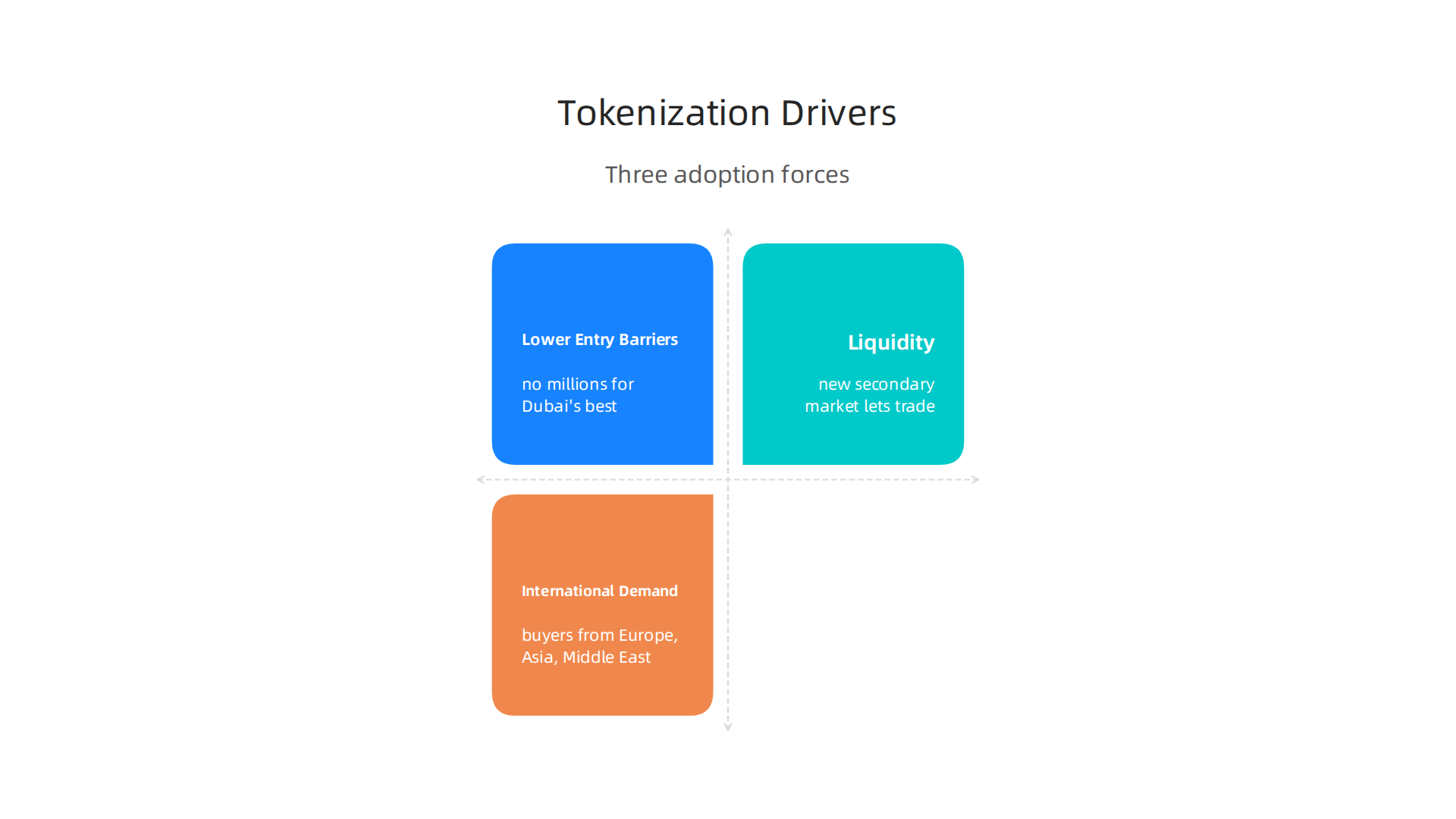
- Lower entry barriers – You no longer need millions of dirhams to invest in Dubai’s best neighborhoods.
- Liquidity – The new secondary market lets you trade your tokens, which is rare in traditional real estate.
- International demand – Buyers from Europe, Asia, and the Middle East see Dubai as a safe place to park money. Tokenization makes it easy to invest from anywhere.
If you are curious about which villa communities are most likely to be tokenized next, our guide to villas for sale in Dubai 2026 covers the top oasis communities that attract this kind of investment.
The market is still young, but the numbers already show real momentum. For anyone interested in real estate dubai uae, tokenization is becoming a smart way to enter the villa market without going all in.
Key Benefits for High-Net-Worth Investors and Homebuyers
So what does all this mean for someone like you? If you are a high net worth individual looking at investment in dubai real estate, tokenization changes the game in three big ways.
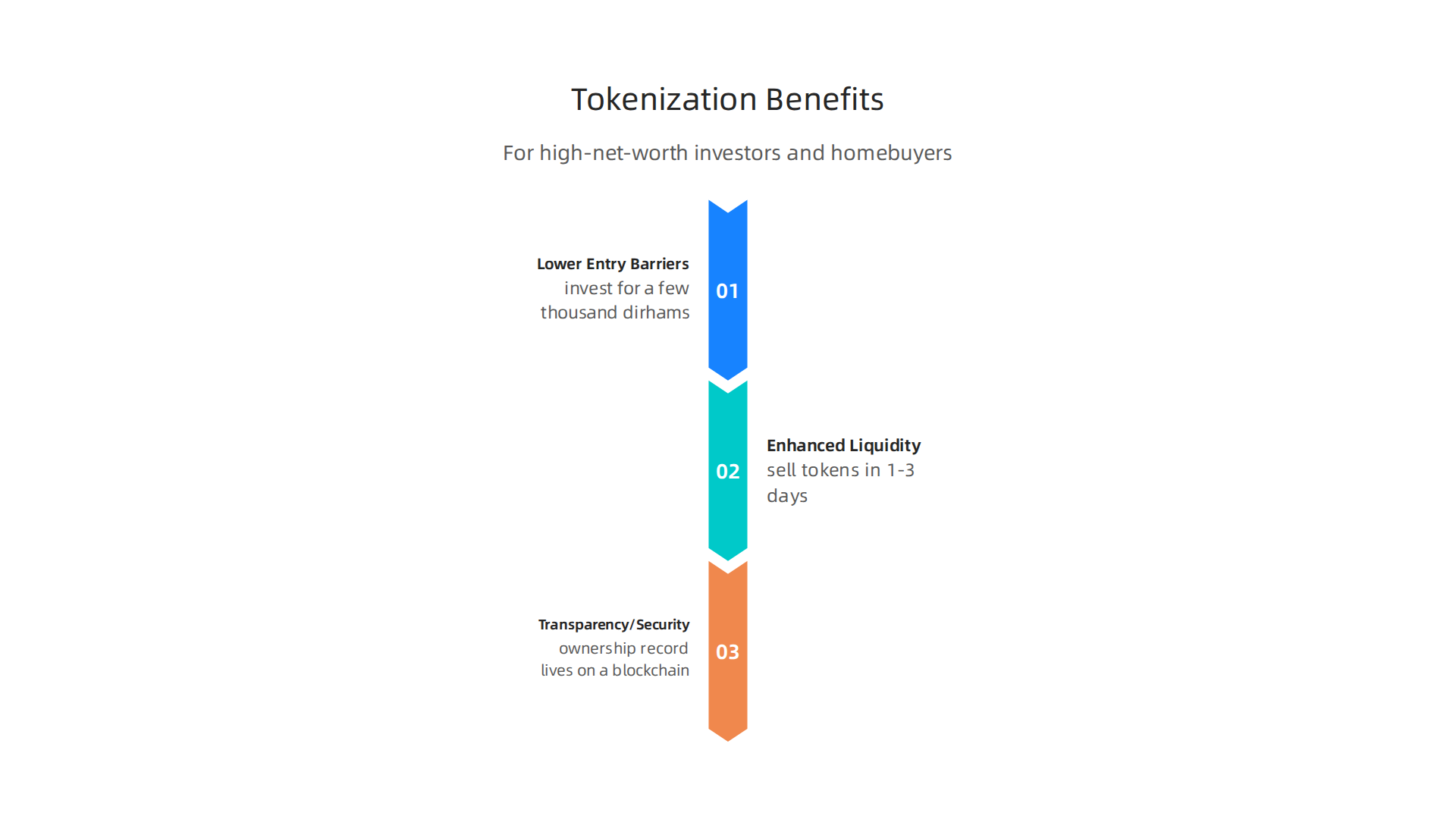
Each one solves a problem that traditional property investing has never been able to fix.
Lower Entry Barriers Into Luxury Villas
Think about the price of a villa on Palm Jumeirah or in Emirates Hills. We are talking millions of dollars. Until recently, your only options were to buy the whole thing or walk away. Tokenization changes that completely.
Instead of needing $5 million for a villa, you can buy tokens worth 1/100th of that property. Some platforms let you invest for as little as a few thousand dirhams. This opens up dubai uae real estate to people who could never afford a full villa but still want exposure to this market.
The advantage is clear. You can now own a piece of Dubai’s most exclusive neighborhoods without tying up all your capital in one property. According to the real estate tokenization benefits guide from InvestaX, this lower barrier to entry is one of the main reasons investors are moving toward digital property ownership.
For dubai real estate investors, this means diversification becomes much easier. Instead of putting everything into one villa, you can spread your money across several properties in different communities. That reduces your risk while still keeping you in the luxury market.
Enhanced Liquidity: Sell When You Want
Traditional real estate has a big problem. When you want to sell a villa, you might wait months to find a buyer. The paperwork alone can take 60 to 120 days. And if you only want to sell part of your investment, you cannot. It is all or nothing.
Tokenization fixes this. Your tokens can be traded on secondary markets. If you need cash, you can sell some of your tokens in as little as one to three business days. You do not have to sell the whole villa. You can sell 10% of your stake and keep the rest.
This is a huge shift for anyone involved in real estate dubai uae markets. Real estate has always been an illiquid asset. Tokenization makes it behave more like a stock. You can rebalance your portfolio, take profits, or exit completely without the headache of finding a buyer for a multi-million dollar home.
Now, there is one thing to be honest about. Secondary markets are still growing. The ONINO real estate tokenization guide points out that liquidity is only as strong as investor demand. In popular Dubai villa tokens, demand has been very high so far. But in less desirable properties, selling might still take time. The key is choosing the right property and platform.
Transparency and Security Through Blockchain
Here is where tokenization really shines for high net worth buyers. When you buy a traditional villa, the ownership record lives with the Dubai Land Department. It is safe, but verifying it takes time. There is paperwork, intermediaries, and room for human error.
With tokenization, everything changes. The ownership record lives on a blockchain. It cannot be changed or faked. You can verify your ownership instantly. Smart contracts handle dividend distributions automatically. If the villa generates rental income, your share lands in your wallet without anyone having to calculate or chase payments.
The UAE real estate tokenization regulatory guide explains how smart contracts execute everything from KYC checks to dividend payments automatically. This cuts out middlemen and reduces the chance of mistakes. You get a level of transparency that traditional real estate simply cannot match.
For high net worth individuals who value privacy and security, this is a big deal. Your ownership is recorded on an immutable ledger. No one can dispute it. No one can alter it. And because the system runs on code, distributions happen on time, every time.
What This Means for Homebuyers Too
These benefits are not just for investors. If you are buying a villa as your primary home, tokenization still helps you. You can enter the market with a lower upfront payment. You can sell part of your stake later if you need liquidity. And you get the peace of mind that comes with transparent, verifiable ownership.
If you are ready to explore your options in Dubai’s luxury villa market, consider booking a FREE Dubai Real Estate Consultation with an expert who understands both traditional and tokenized property investments. It is a smart first step toward making informed decisions in this evolving market.
The bottom line is simple. Tokenization gives you more control, more flexibility, and more transparency than traditional villa buying ever could. For anyone serious about investment in dubai real estate, these benefits are worth paying attention to.
Challenges and Risk Mitigation in Tokenized Villa Investments
No investment is perfect, and tokenized villas come with their own set of risks. The good news is that you can manage most of them with the right knowledge. Let us walk through the biggest challenges and how to handle them.
Regulatory Uncertainties Still Exist
Here is the honest truth. Real estate tokenization in Dubai is still a young market. The rules are getting clearer every year, but some gray areas remain.
Different regulators have different views. The Virtual Assets Regulatory Authority (VARA) oversees virtual asset activities in Dubai. But the Securities and Commodities Authority (SCA) handles federal financial markets. And free zones like DIFC and ADGM have their own rules. Depending on how a token is classified, it might fall under one, two, or even three of these bodies.
This means you need to know which regulator has authority over the token you are buying. The Legal Framework for Real Estate Tokenisation in the UAE explains that cross-border compliance adds another layer. If you are an international investor, tax rules in your home country may also apply.
The fix is simple. Work with platforms that are properly licensed by VARA, the SCA, or the relevant free zone authority. Avoid anything that sounds too loose or unregulated.
Valuation Discrepancies and Illiquidity During Downturns
Tokens are not magic. If the property market drops, your token value drops too. And while secondary markets can let you sell fast, that only works when there are willing buyers.
During a market downturn, finding a buyer at fair value might take weeks. The real estate tokenization trends and facts article from ScienceSoft points out that liquidity is tied to demand. A popular villa in Palm Jumeirah will have better liquidity than a niche property in a less desirable area.
To reduce this risk, diversify across multiple properties and platforms. Also, treat tokenized real estate as a medium-term commitment rather than a quick flip.
Due Diligence Is Critical
This is where most people make mistakes. Tokenization removes some middlemen, but it does not remove the need for careful research.
You must check three things. First, the token issuer. Do they have the proper VARA license? Second, the property title. Is the underlying villa legally held by a special purpose vehicle (SPV) that protects your ownership? Third, the smart contract. Has it been audited by a reputable security firm?
The guide on real estate tokenisation in the UAE from Clyde and Company stresses that smart contract bugs can lead to lost funds. Audits lower that risk but do not eliminate it completely.
If you want to avoid expensive mistakes, start with a trusted guide. Check out this comprehensive guide on how to buy a Dubai luxury house in 2026 and avoid costly mistakes. It covers the due diligence steps you should never skip.
The Bottom Line on Risk
Every investment has risk. The key is knowing what they are and having a plan. Stick with regulated platforms, diversify your holdings, and always do your homework before buying any token.
The Future: Integration with Dubai’s Real Estate Ecosystem
Where is all of this heading? The short answer is that real estate tokenization is not a passing trend. It is becoming a standard part of how new villa developments work in Dubai. And the pace of change is picking up fast.
Tokenization Becomes the Norm for New Developments
Developers in Dubai are already building tokenization into their sales plans. Instead of offering just traditional full property purchases, many new villa communities will sell tokens alongside conventional ownership. This gives buyers more flexibility. You can buy a full villa if you want, or you can buy tokens representing a share of one.
This shift is especially strong in master planned communities like Dubai Hills Estate, Emirates Hills, and the upcoming oasis style communities. Developers see tokenization as a way to reach more buyers, especially international investors who want a piece of Dubai’s luxury market without buying an entire property.
The numbers back this up. Dubai’s tokenised real estate market is projected to reach Dh60 billion by 2033, representing about 7% of all real estate transactions in the city. That is not small change. It signals that tokenization will be a major force in the market for years to come.
UAE Pass and E-Government Integration
One of the biggest friction points in real estate investing is the paperwork. KYC checks, identity verification, and ownership registration can take days or weeks. Tokenization combined with Dubai’s digital government systems is about to change that.
The UAE Pass digital identity system is expected to integrate directly with tokenized real estate platforms. This means you will be able to verify your identity with a single login. No more sending passport copies back and forth. No more waiting for manual approvals. The whole process becomes instant.
This integration also simplifies tax reporting and income distribution. When rental yields are paid out to token holders, the system can automatically handle withholding taxes and send you a clear record. The Dubai Land Department real estate tokenization pilot project is already testing these capabilities as part of the Real Estate Evolution Space Initiative.
What 2030 Looks Like for Tokenized Villas
Industry experts predict that by 2030, a significant percentage of luxury villa transactions in Dubai will involve some form of tokenization. This is not just about buying and selling. It is about how properties are financed, managed, and traded.
Here is what to expect:
- New villa developments will offer token options from day one
- Secondary trading of villa tokens will be as easy as buying stocks
- Rental income will be distributed automatically to token holders
- Cross border investing will become frictionless
The real estate tokenization market trends and 2026 outlook article from Tokenizer.Estate points out that institutional investors and banks are starting to join the space. When big money gets involved, the market matures quickly.
What This Means for You
If you are a Dubai real estate investor, the message is clear. Tokenization is not something to ignore. It changes how you can access the market, how you manage your portfolio, and how you exit investments.
The smartest move is to educate yourself now. Learn how tokenization works at a practical level. Understand which platforms are regulated and which are not. And start thinking about how fractional ownership fits into your overall strategy.
For example, if you are looking at luxury villa communities, compare how different developers handle tokenization. Some may offer better terms, lower fees, or more liquid secondary markets. The more you know, the better choices you will make.
Ready to explore your options in Dubai’s villa market? Get a FREE Dubai Real Estate Consultation to discuss how tokenized and traditional villa investments can work for your portfolio.
Summary
Real estate tokenization turns luxury Dubai villas into blockchain-backed digital tokens that represent fractional ownership, rental income rights, and tradable shares. This article explains how tokenization works—from placing a property into an SPV and minting tokens, to regulatory approvals by VARA, DLD and DIFC and secondary-market trading on platforms like Prypco Mint. It covers why Dubai is leading the trend (low entry amounts from ~540 AED, strong demand, and government support), market figures such as the DLD’s AED 60 billion target by 2033, and how tokenization improves liquidity, transparency and portfolio diversification. You will learn the practical steps to invest, the main legal and technical risks to check (licenses, audited assets, smart contract audits), and simple examples showing ownership math and income distribution. The guide finishes with advice on choosing regulated platforms, conducting due diligence, and what to expect as tokenized villas become integrated into Dubai’s property ecosystem by 2030.