
Buying a beautiful villa in Dubai can be a great step for families and investors in 2026. But it’s also a big decision with many things to think about. One very important part is understanding the "regulatory map" of Dubai.

This map shows which government rules apply to different areas. These rules are set by various groups, including the Dubai Development Authority (DDA) and what was once known as the Dubai Creative Clusters Authority (DCCA).
Actually, the Dubai Development Authority is the main group now, overseeing things like building, city rules, money matters, and even immigration for many special zones in Dubai.

It used to be called the Dubai Creative Clusters Authority and before that, the Dubai Technology and Media Free Zone Authority Dubai Development Authority – Wikipedia. These authorities are key because they influence everything from who can build a property to who can own it, and how investors are kept safe. Different rules can apply depending on where your dream villa is located.
For high-net-worth buyers and smart investors, knowing about these different rules is super important. It affects how you pick a villa, how carefully you check everything before you buy (we call this due diligence), and even how long the whole buying process takes. Some areas might have simpler rules, while others might be more complex because of their special status under the Dubai Creative Clusters Authority or other bodies. This means your plans for buying a luxury home might change based on where it is and which authority looks after that area.
This guide is here to help you make sense of it all. We will give you clear ideas about the different rule-making zones, easy steps for checking properties, lists of costs and rules, and what to do next. It’s like having a helpful map for your journey to buying a villa in Dubai. For more help on navigating the market, you might want to read our full Dubai Villa Buying Guide 2026 for families and investors.
Buying, selling, renting, or investing in Dubai? Connect with Ayaz Salman for FREE Dubai Real Estate Consultation.
When you look into buying a villa in Dubai, it is very important to know about the main groups that make and uphold the rules. You will often hear about the Dubai Creative Clusters Authority (DCCA) and the Dubai Development Authority (DDA). The simple truth is that the Dubai Development Authority, or DDA, is the current name for the main group that looks after many special areas in Dubai. The DCCA was an earlier name for this same authority.
Even though the name changed, the rules and ways of working that came from the time it was called the Dubai Creative Clusters Authority are still very much alive and important. The main job of the Dubai Development Authority is to lead and manage the growth of Dubai’s special zones. These zones are often where creative and technology businesses thrive. The DDA helps to attract and give licenses to companies that work in these creative fields, making Dubai a strong hub for them, as outlined in laws about creative clusters Law No. (15) of 2014 concerning Creative Clusters in the Emirate of Dubai.
The DDA handles many important jobs related to villas and other buildings in its areas:
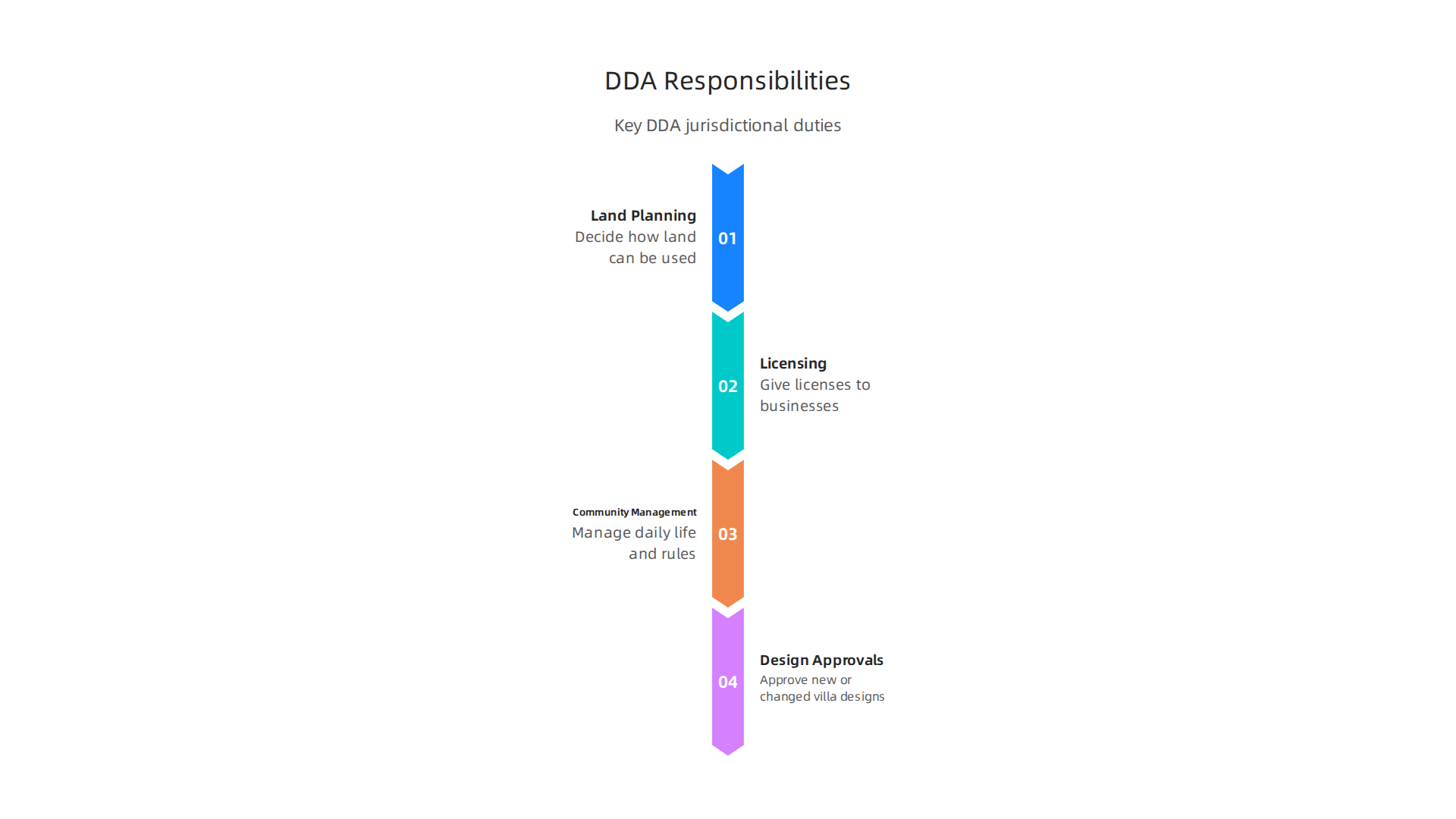
- Land Planning: They decide how land can be used and where new homes or businesses can be built.
- Licensing: They give licenses to businesses and, indirectly, affect how properties can be used if they are tied to a business license.
- Community Management: They help manage the daily life and rules within these special communities, making sure they run smoothly.
- Design Approvals: If you want to build a new villa or change an existing one, the DDA must approve its design.
For people who want to buy a villa, this means a few key things. First, the approvals for building or changing a villa will depend on the DDA’s rules for that specific area. Sometimes, older rules from when it was the Dubai Creative Clusters Authority might still apply to certain plots of land or communities Decree No. (30) of 2017 Extending the Application of the Dubai Creative Clusters Urban Planning and Construction Legislation to Certain Land Plots in the Emirate of Dubai. These rules can also change how long it takes to get approvals. It also tells you who to talk to when you have questions about your property, usually one of the DDA’s departments.
When buying property in Dubai, especially a villa, knowing these details helps you make smart choices. It ensures that your plans for your new home will fit with the rules of the community. Understanding the roles of the Dubai Development Authority and its past form, the Dubai Creative Clusters Authority, makes the buying process clearer. If you want to learn more about making good choices when buying a luxury villa, consider reading about smart buying strategies for luxury villas for sale in Dubai 2026. This knowledge helps you understand the bigger picture, including how things like major infrastructure developments, which are overseen by groups like the DDA, shape the value and future of your investment.
When looking to build a new oasis-style villa or make changes to an existing one, you’ll need to know about special permits and design rules.

While the Dubai Development Authority (DDA) sets many big-picture rules, other groups also have a say in how your villa looks and is built.
Typical Planning Approvals and Building Permits
For almost all villa construction or big changes in Dubai, you must get a building permit. The main group that handles these permits is the Dubai Municipality, also known as DM.
They make sure that all building plans follow Dubai’s safety rules, building codes, and zoning laws. Getting a permit from DM is a must before you start any building work, like making your villa bigger, changing its layout, or even doing external renovations Dubai Municipality Building Permit 2026: process, Fees, Documents. Without this permit, you could face big fines or even have your work stopped.
Beyond the Dubai Municipality, you might also need approvals from other groups. For example, if your villa project needs new electricity or water connections, or if you plan to install solar panels, you will need approval from DEWA (Dubai Electricity and Water Authority) Authority Approvals Dubai 2026: Complete Guide. This is true no matter where your property is located in Dubai.
Design Codes, Landscaping, and Community Standards
Many "oasis-style" villas are found in large, planned communities. In these areas, the master developer who built the community often has its own set of rules for how homes should look. These are called design codes. These rules cover things like:
- Exterior Look: What color you can paint your villa, what materials you can use for walls or roofs, and even the style of doors and windows.
- Landscaping: How your garden should be designed, the types of plants you can grow, and where fences or walls can be placed. These rules help keep the community looking green and harmonious.
- Community Amenities: How your villa interacts with shared spaces, ensuring that any changes you make don’t negatively affect your neighbors or the overall look of the community.
These design rules are put in place by developers like Emaar to keep a consistent and beautiful look across the entire community, which helps maintain property values and the desired lifestyle Villa Renovation, Extension & Modification Approval Dubai. For example, if you want to make changes to your villa in an Emaar community, you’ll need their approval in addition to the Dubai Municipality’s permit.
Developer-Controlled vs. Regulator-Controlled Approvals
It’s important for villa buyers to understand the difference between approvals from the main regulators and those from developers.
- Regulator-Controlled Approvals: These come from government bodies like the Dubai Municipality or the Dubai Development Authority (DDA), and they are about safety, basic building rules, and city planning. For most areas, Dubai Municipality handles these, but in certain special zones, the DDA might oversee land planning and design approvals directly, continuing from the old Dubai Creative Clusters Authority rules.
- Developer-Controlled Approvals: These come from the company that built your community. They are about keeping the look and feel of the community consistent. If you live in a master-planned area, you will likely need a No Objection Certificate (NOC) from your developer before you can even apply for a DM permit.
Before you buy a villa or plan any changes, you should always check which authorities and developers have a say. Knowing these rules helps you avoid problems and ensures your dream home fits perfectly within its community. If you have questions about which permits apply to your specific villa or community, it’s best to ask an expert.
Are you looking to buy, sell, rent, or invest in Dubai real estate? Connect with Ayaz Salman for a FREE Dubai Real Estate Consultation.
After you understand all the permits and design rules for your villa in Dubai, the next big step is knowing how you will own it. This means looking at different ways to legally own your property and how to make sure your ownership is correctly recorded.
Pathways to Legal Ownership: Freehold and Leasehold
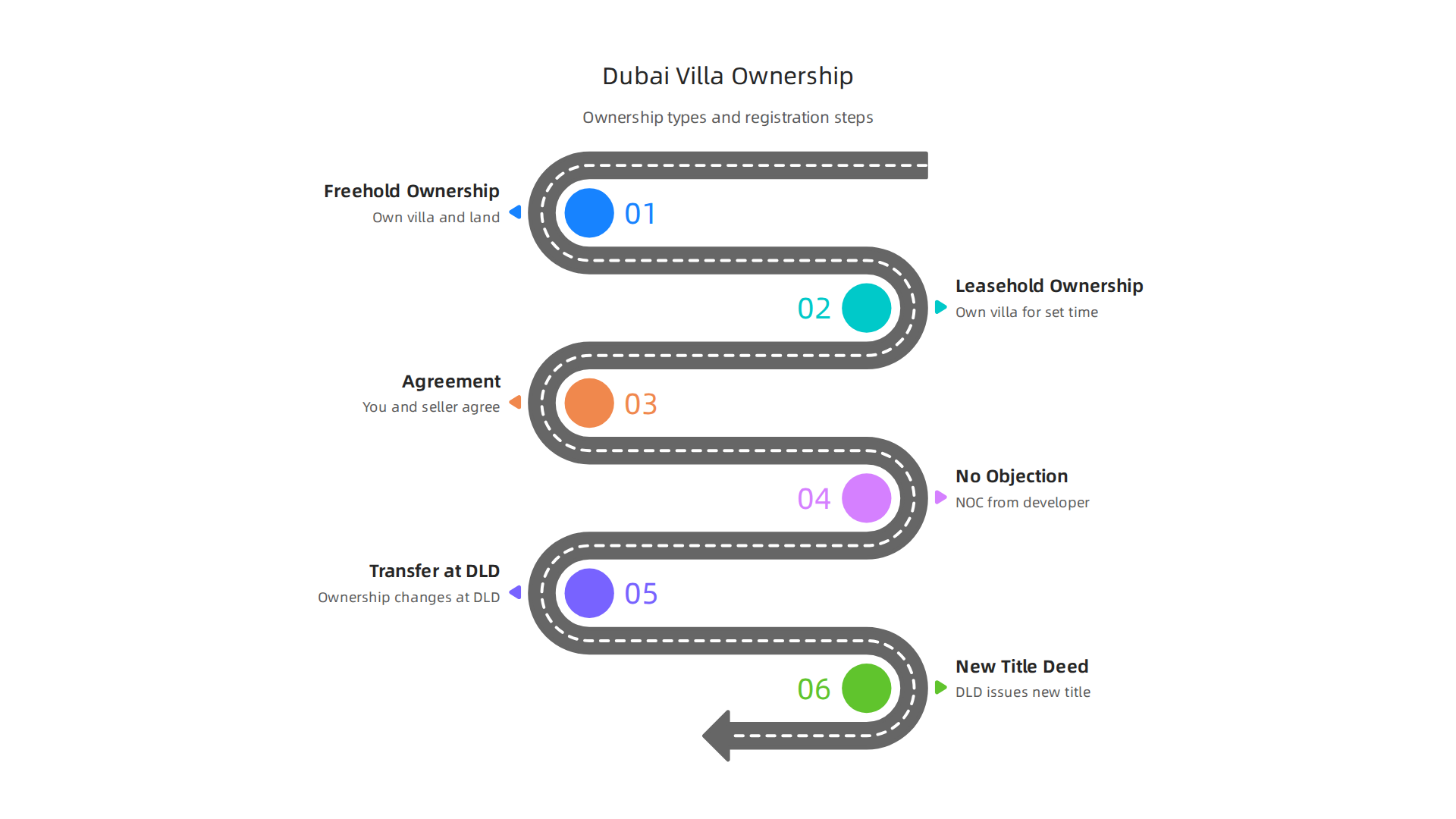
In Dubai, there are two main ways to legally own a villa: freehold and leasehold.
Knowing the difference is very important when you are buying.
- Freehold Ownership: This is the most complete type of ownership. When you buy a freehold property, you own both the villa itself and the land it sits on. There is no time limit for this ownership; it lasts forever. This means you have total rights to sell your villa, rent it out, change it (with permits, of course), or pass it on to your family Freehold vs Leasehold Property in Dubai: What’s the Difference?. Most villas in Dubai’s newer, master-planned communities are sold as freehold properties.
- Leasehold Ownership: With leasehold, you own the villa for a set amount of time, but you do not own the land it is built on. This period is usually long, like 30 to 99 years All About Freehold vs Leasehold Property in Dubai. After this time is up, the land goes back to its original owner, unless the lease is renewed. While less common for villas in popular "oasis-style" communities today, it’s good to know this option exists in some parts of Dubai.
For villa buyers, freehold ownership offers the most security and flexibility. You’ll find that many luxury villas, especially in areas managed by major developers, come with freehold titles.
Title Registration Workflows and Verifying Ownership
Once you choose a villa, the ownership must be officially recorded. This process is called title registration. In Dubai, the Dubai Land Department (DLD) is the main government body that handles all property registrations.
They keep a public record of who owns what.
When you buy a villa, your name is registered as the new owner on the property’s title deed. This title deed is the official proof of your ownership. The process usually involves several steps:
- Agreement: You and the seller agree on the price and sign a Sale and Purchase Agreement.
- No Objection Certificate (NOC): If the villa is in a master community, you will need a NOC from the developer.
- Transfer at DLD: Both you and the seller go to the Dubai Land Department (or through approved centers) to transfer the property title. This is where the ownership officially changes.
- New Title Deed: The DLD then issues a new title deed with your name on it.
It’s very important that buyers verify the clarity of the title. Before you sign any papers, you should always check that the seller actually has the right to sell the property and that there are no hidden debts or claims on it. A good way to learn more about the overall process is by checking out a comprehensive Dubai villa buying guide 2026 for families and investors.
Practical Checks for Buyers
To make sure your villa purchase goes smoothly, here are some practical checks you should do:
- Confirm Developer Rights: Make sure the developer has all the necessary approvals to sell the property and that the land is properly registered under their name before construction or sale. Sometimes, general authorities like the Dubai Development Authority (DDA), which used to include the dubai creative clusters authority, set the broad rules for specific development zones.
- Community Easements: Check if there are any easements. These are rights that allow others to use a part of your property, like a shared pathway or utility line. Your property agent can help you find this information.
- Encumbrances: An encumbrance is a claim against a property by another party, like a mortgage or unpaid fees. Always make sure the property is free of these before you buy. The Dubai Land Department can provide records to help you check for these.
- Expert Advice: Working with a trusted property consultant can help you understand all the legal details and paperwork.

They can guide you through title registration and ensure all checks are done correctly. You can learn more about how to select one in our guide on how to choose a property consultant in Dubai for villa buying in 2026.
Understanding these ownership types and checks protects your investment and helps you confidently secure your dream villa in Dubai. Knowing about freehold and leasehold, along with the title registration process, is key for any buyer in 2026. This full and clear ownership, with the title registered under your name at the Dubai Land Department, is often called perpetual ownership because it does not have an expiry date Dubai Property Ownership: Freehold vs Leasehold Explained.
Understanding how to legally own your villa in Dubai is a big first step. But actually buying it involves a series of costs and steps that buyers need to know. It’s not just the price of the villa, but also different fees and ways to protect your money during the sale. Let’s look at the financial side of buying your dream home in 2026.

Costs, Fees, Transaction Steps and Escrow Protections for Buyers
When you buy a villa in Dubai, there are several costs on top of the actual property price. These extra fees cover things like registration, agent services, and more. Knowing about them helps you plan your budget.
Typical Transaction Costs
Here are the main costs you will likely pay:
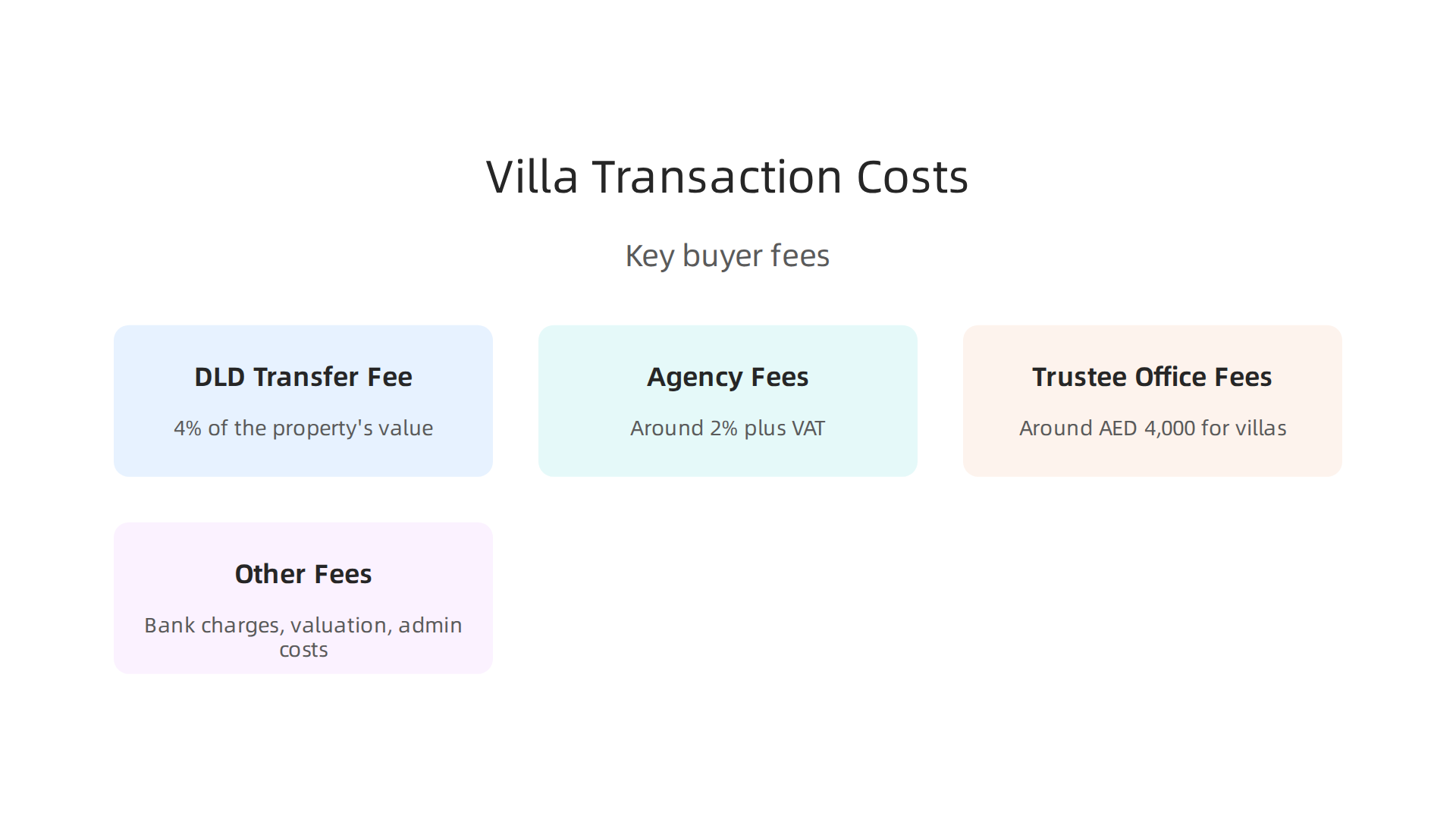
- Dubai Land Department (DLD) Transfer Fee: This is the biggest cost. It is 4% of the property’s value. Even though it is sometimes split between the buyer and seller, buyers often end up paying the full 4% in practice Dubai Property Transfer Fees 2026 | DLD & Agent Costs. This fee helps make sure your ownership is officially recorded.
- Agency Fees: If you use a real estate agent (which is highly recommended), you will pay a commission. This is usually around 2% of the villa’s sale price, plus a 5% VAT on that commission Dubai Property Buying Costs | Complete Fee Breakdown 2026.
- Trustee Office Fees: These are small fees paid to the centers that help process the DLD transfer. For villas worth AED 500,000 or more, this fee is usually around AED 4,000 DLD Fees in Dubai: Your Complete 2026 Costs Guide.
- Title Deed Issuance Fee: The DLD charges a small fee, usually AED 250, to issue your new title deed, which is your proof of ownership.
- Other Fees: Depending on whether you get a mortgage, there might be bank charges, valuation fees, and other smaller administrative costs.
All these costs can add up. Buyers in 2026 should expect to pay an extra 6% to 9% on top of the villa’s price to cover all these fees Dubai Property Transfer Fees Explained in 2026. Being ready for these costs helps avoid surprises.
Escrow Mechanisms and Buyer Protections
Dubai’s real estate market has strong rules to protect buyers, especially when it comes to money. The main protection is through escrow accounts.
What is an Escrow Account?
Think of an escrow account as a safe, neutral bank account where money is held by a third party (like the DLD or an approved bank) during a property transaction. Neither the buyer nor the seller can touch this money until all parts of the sale agreement are met. This makes sure that the seller does not get your money until you officially own the property, and you do not lose your money if the deal falls through.
The Dubai Land Department (DLD) oversees these protections. For example, when you buy a property that is still being built (an "off-plan" property), all payments go into an escrow account linked to that project. This money is only released to the developer as they complete different stages of construction. This system helps protect your investment, ensuring the project gets built or your money is safe. The overall legal framework for properties is also shaped by larger entities like the dubai creative clusters authority dubai development authority which set broad guidelines for development zones.
Typical Transaction Timeline and Compliance Milestones
Buying a villa in Dubai follows a set process, with clear steps and important checkpoints:
- Offer and Memorandum of Understanding (MOU): You make an offer for the villa. Once agreed, you and the seller sign an MOU, which is a formal agreement. You typically pay a deposit (usually 10% of the price) into an escrow account at this stage.
- No Objection Certificate (NOC): If the villa is in a master community, you will need a NOC from the developer. This confirms the developer has no issues with the sale and that all service charges are paid.
- DLD Transfer: Both you and the seller go to a DLD-approved trustee office. Here, all paperwork is checked, fees are paid, and the property ownership is officially transferred. The DLD then issues the new title deed in your name. This is a major compliance milestone where regulatory involvement ensures a smooth and legal transfer.
- Handover: Once the transfer is complete, the seller hands over the keys to your new villa.
Throughout these steps, following legal advice and sticking to the set timeline is important. This ensures your purchase is smooth and your investment is safe. If you’re looking for more detailed information on making smart decisions, check out our guide on smart buying strategies for luxury villas for sale in Dubai 2026.
Understanding these financial steps, protections, and the buying timeline means you can move forward with confidence. It helps you prepare for all costs and ensures your investment is well-protected. If you have questions about the transaction process or any other aspect of buying property in Dubai, we can help.
Buying, selling, renting, or investing in Dubai? Connect with Ayaz Salman for a FREE Dubai Real Estate Consultation.
Now, let’s look at what it’s like to live in a master-planned community after you buy your dream villa, focusing on the rules, costs, and how things are managed.
Community rules, service charges and compliance in master-planned developments
Living in one of Dubai’s beautiful "oasis-style" communities means enjoying many shared benefits, like green parks, swimming pools, and round-the-clock security. But it also means following certain rules and paying regular fees called service charges. These rules and charges help keep the community a great place to live for everyone.
Community Regulations and Homeowner Association (HOA) Rules
Most master-planned communities in Dubai have a Homeowner Association (HOA) or a community management body. This group sets the rules to keep the area neat and orderly. These rules can cover many things, such as:
- Property appearance: What colors you can paint your villa, what kind of fences are allowed, or rules about landscaping your garden. For example, if you want to make changes to your villa, like an extension or renovation, you often need special approval from the community developer’s design review committee, in addition to permits from the Dubai Municipality (DM) Approval for Villas. In 2026, some developers even require a design review for all structural and external modifications to villas within their communities, which can add extra steps to renovation timelines Villa Renovation, Extension & Modification Approval Dubai.
- Noise levels: Rules to ensure peace and quiet, especially during certain hours.
- Pet policies: Guidelines on what kinds of pets are allowed and how they should be managed.
- Parking: Where residents and guests can park their cars.
These rules are in place to keep the community running smoothly and to maintain its value. The broader guidelines for how these communities are developed and managed often come from larger government entities, including the dubai creative clusters authority dubai development authority. These authorities set standards that influence everything from initial planning to ongoing community living. You can learn more about these kinds of premium developments in our article about Luxury Villas Dubai A Deep Dive Into Al Barari And The Oasis Communities.
Service Charges: What You Pay For
Service charges are fees paid by villa owners to cover the cost of maintaining and operating shared facilities and services within the community. These usually include:
- Maintenance of common areas: Landscaping, swimming pools, gyms, parks, and roads.
- Security: Guards and surveillance systems.
- Waste management: Rubbish collection.
- Utilities for common areas: Electricity and water for shared spaces.
- Insurance: For common property.
The amount you pay usually depends on the size of your villa or plot and is often calculated per square foot. It is important to know that these charges are separate from your individual villa’s utility bills.
Compliance, Enforcement, and Solving Problems
Community management bodies keep an eye on how well residents follow the rules. If rules are not followed, there can be actions taken, such as:
- Warnings: A friendly reminder about a rule.
- Fines: Money penalties for serious or repeated rule-breaking.
- Service restrictions: In some cases, access to community facilities might be temporarily stopped.
For major changes to your villa, such as renovations, you need specific approvals. For instance, any structural or external modifications in many communities require a "No Objection Certificate" (NOC) from the developer and other necessary permits. This ensures your changes align with both community standards and wider regulatory frameworks. In 2026, many projects need Authority Approvals Dubai for various development aspects, ensuring proper oversight.
If there is a problem with how the community is managed, or if you have a dispute with the HOA, you have ways to get help. The Dubai Land Department (DLD) and its Real Estate Regulatory Agency (RERA) have systems in place to handle disputes between owners and community management. They can help mediate disagreements and ensure that management bodies follow the law.
What to Check During Due Diligence
Before buying a villa in a master-planned community, it’s very smart to do your homework. This means looking into:
- Community Rules and Regulations: Ask for a copy of the community handbook or bylaws. Read them carefully to understand any limits or requirements.
- Service Charge History: Ask for past service charge statements. This helps you understand how much you will pay and if the charges have been stable.
- Community Budget: Review the annual budget to see where your money is going. Look for any major upcoming expenses that could increase fees.
- Developer and Management Company: Research the reputation of both the developer and the company managing the community. A well-run community makes for happier living.
By taking the time to understand these rules and costs, you can make sure your new home in a Dubai oasis community truly fits your lifestyle and expectations.
By taking the time to understand these rules and costs, you can make sure your new home in a Dubai oasis community truly fits your lifestyle and expectations. But your homework shouldn’t stop there. Knowing about deeper checks, how to solve problems, and what keeps your money safe is just as important.
Due diligence, dispute resolution and investor protections
Buying a villa in Dubai is a big step. It’s smart to do a thorough check, understand how to fix problems, and know what protections you have. This helps make sure your investment is safe and happy.
Doing Your Homework: A Smart Buyer’s Checklist
Before you sign any papers, dig deeper into these important areas:
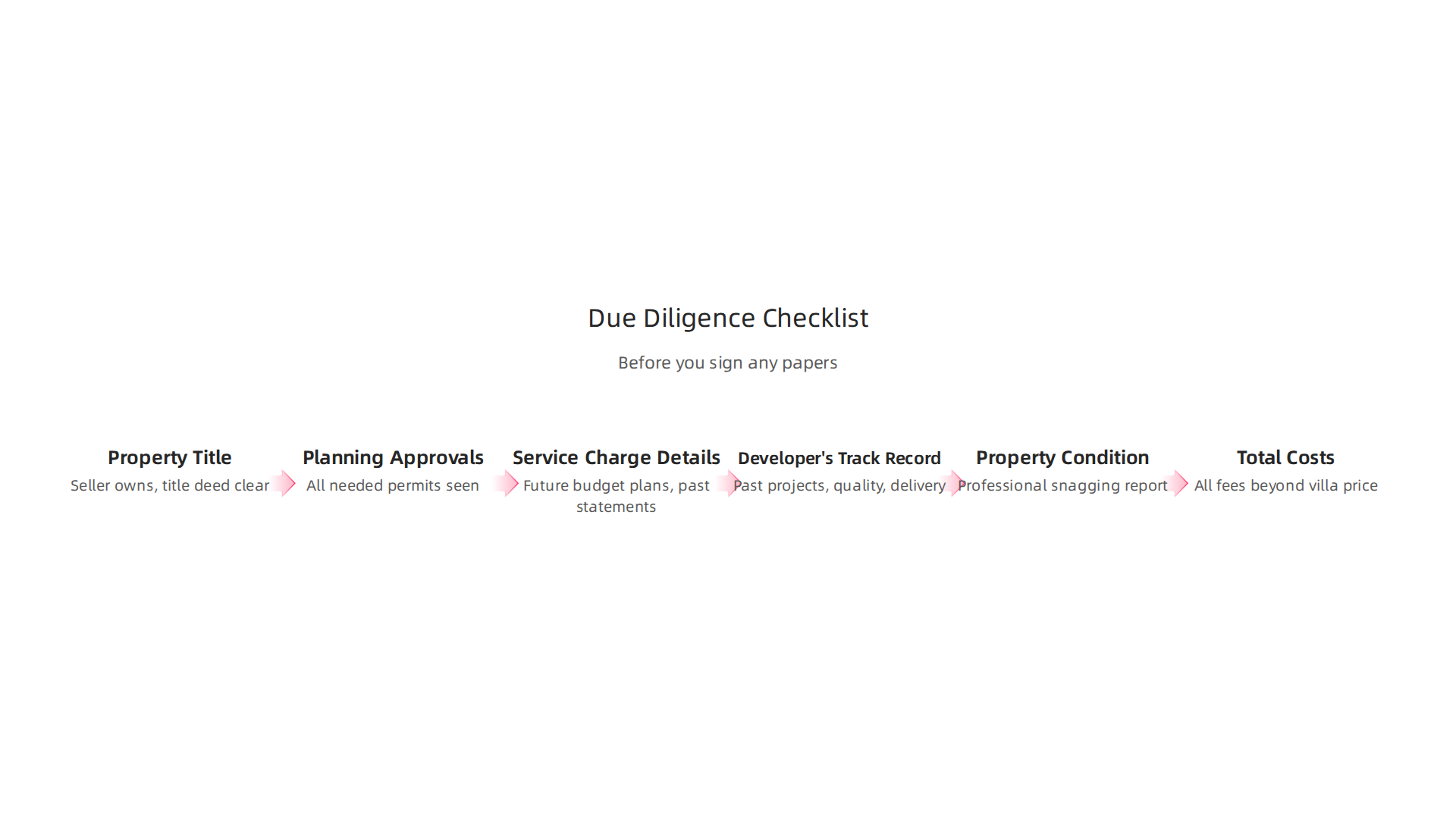
- Property Title and Ownership: Always make sure the seller truly owns the property and that the title deed is clear. You can verify the title deed and other details with the Dubai Land Department (DLD) to check for any issues Importance of Due Diligence Exercise in the Emirate of Dubai. This step helps avoid nasty surprises like legal claims or debts on the property.
- Planning Approvals: If you’re buying a newly built villa or one that has been changed, ask to see all the needed approvals and permits. This ensures the building matches what was planned and allowed by authorities.
- Service Charge Details: Beyond looking at past charges, ask for the community’s future budget plans. This can show if there are big repair jobs or changes coming that might make your fees go up.
- Developer’s Track Record: Research the company that built the community. Look at their past projects to see if they deliver on time and with good quality [What Checks Should You Run Before Buying a Luxury Villa?](https://sedubaireal estate.com/blog/what-checks-should-you-run-before-buying-a-luxury-villa).
- Property Condition: Get a professional to check the villa for any hidden problems. This is called a snagging report. It covers things like the structure, water systems, and electricity.
- Total Costs: Remember that besides the villa’s price, there are other fees. For example, the DLD charges a 4% transfer fee on the property’s purchase price in 2026, which is usually paid by the buyer Dubai Property Taxes & Fees 2026: Complete Cost Breakdown. Factor in all costs, like agent fees and bank charges if you’re taking a loan.
A full checklist will help you avoid issues later. If you want more tips, check out our Smart buying strategies for luxury villas for sale in Dubai 2026.
How to Solve Problems: Dispute Resolution in Dubai Real Estate
Even with careful checks, sometimes problems come up. If you have a disagreement with a developer, an HOA, or another party, Dubai has ways to help solve it:
- RERA and DLD: The Real Estate Regulatory Agency (RERA), which is part of the Dubai Land Department (DLD), is key. They have a special center for real estate disputes. They can help talk through problems and ensure everyone follows the rules.
- Mediation and Arbitration: These are ways to solve problems without going to court. A neutral person helps everyone agree on a solution. It’s often quicker and less costly than a full court case.
- Legal Action: If other ways don’t work, you can go to court. Dubai’s legal system for real estate is well-known for being fair.
Keeping Your Investment Safe: Investor Protections and Expert Help
Dubai works hard to make sure property buyers feel safe and confident. Here’s how:
- RERA’s Role: RERA sets many rules to protect buyers, especially for new properties that are still being built (called off-plan). For example, money you pay for off-plan properties goes into a special protected account to make sure it’s used only for building your home. This helps protect you from problems with the developer.
- Professional Advisors: It is always a good idea to work with experts. A good real estate agent, like those who focus on villas in oasis communities, can guide you. Also, hiring a lawyer for real estate matters can ensure all your documents are correct and your rights are protected. For more guidance on finding the right help, read our article on how to choose a property consultant in Dubai for villa buying in 2026.
- Government Oversight: Bigger government bodies, like the
dubai creative clusters authority dubai development authority, also play a part. They set overall standards for how areas are developed and managed, which brings trust to the market.
Overall, Dubai offers strong investor protections. But taking your own steps and getting good advice is the best way to make sure your villa purchase goes smoothly.
If you’re buying, selling, renting, or investing in Dubai property, having the right advice can make all the difference. For personalized guidance and to navigate the market with confidence, consider connecting with an expert.
FREE Dubai Real Estate Consultation
Summary
This guide explains the regulatory landscape you must know before buying a villa in Dubai, focusing on how authorities such as the Dubai Development Authority (formerly DCCA) and Dubai Municipality shape planning, permits, and community rules. It covers who issues design approvals, the difference between developer-controlled and regulator-controlled permissions, and the specific permits needed for construction or renovation. The article also walks you through ownership types (freehold vs leasehold), title registration with the Dubai Land Department, and practical checks to verify clear ownership. Financial steps are detailed, including typical fees, escrow protections and the usual transaction timeline. Finally, it explains living in master-planned communities — service charges, HOA rules — and gives a due-diligence checklist plus options for dispute resolution and investor protection so buyers can move forward confidently.